

No matter the season or weather, falls can happen anytime, anywhere. The good news? Most fall-related incidents are completely preventable with a few smart home updates, minor lifestyle changes, and by following fall safety tips for seniors.
You don’t need a complete home renovation or expensive equipment to make a difference. Many of the most effective fall prevention tips for seniors are quick, affordable, and easy to put in place. By making thoughtful safety adjustments and following our fall prevention tips for seniors, you can feel more confident at home and maintain the independence you’ve worked so hard to build.
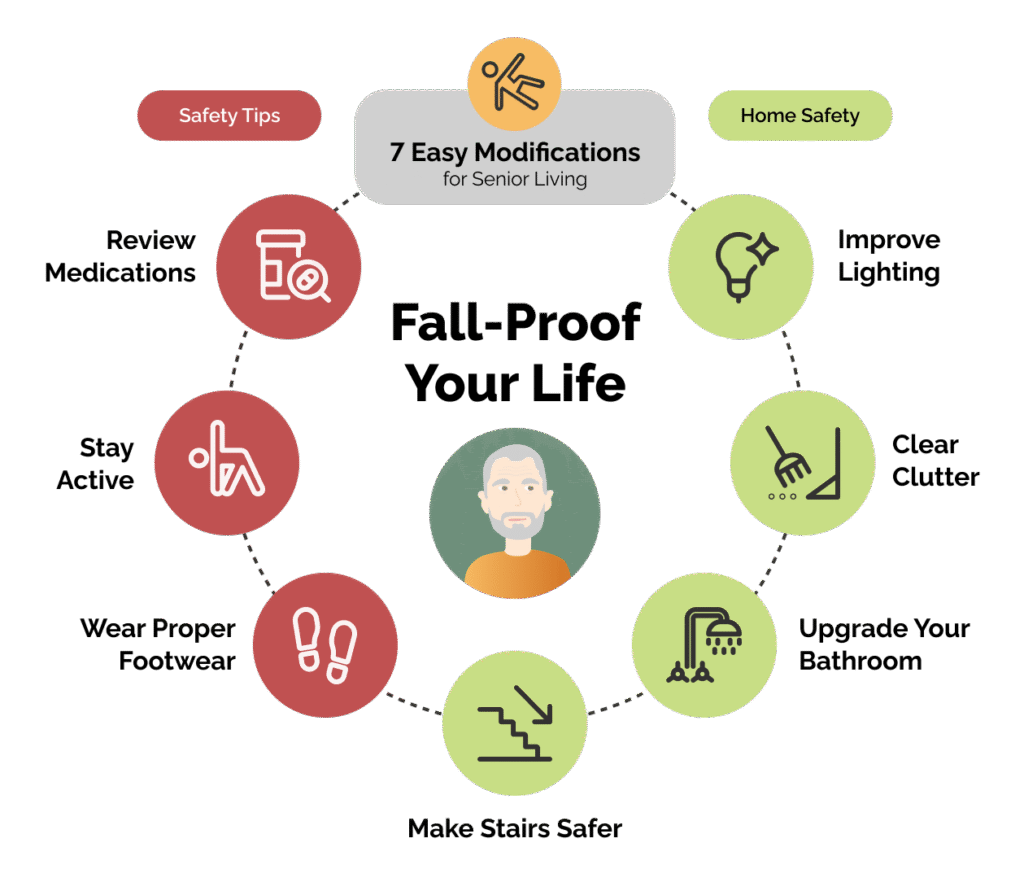
1. Improve Lighting
We move around the house far more often in low light than we realize. Perhaps early morning trips to the kitchen, late night walks to the bathroom, and those “just for a second” hallway trips. Even if you feel sure on your feet, dim lighting can create unnecessary risks. In fact, poor lighting is one of the most overlooked fall risks in any home, but it’s also one of the easiest to fix.
Start by installing bright LED bulbs throughout your living space, paying special attention to stairways, hallways, and bathrooms. Keep a flashlight or lamp within arm’s reach of your bed for those nighttime trips when you don’t want to turn on overhead lights. Motion-sensor night lights are also game-changers. Place them in key areas so paths automatically light up when you get out of bed. They’re bright enough to guide you safely, but soft enough not to disrupt your sleep.
2. Declutter Walkways
Your home should be a place where you can move freely and confidently, not an obstacle course waiting to trip you up. Clutter, no matter how small, can turn into a tripping hazard. Take a purposeful walk through your home and honestly assess every area. Notice anything you regularly step over, walk around, or plan to “move later.”
Prioritize clearing off the floors, securing electrical cords along baseboards or behind furniture, and keep everyday items within easy reach so you’re not tempted to overextend yourself or climb on unstable surfaces to get what you need.
Don’t forget about outdoor walkways! Trim overgrown bushes and vines that creep over walkways, stay on top of leaf removal, and make sure to remove any weather-related debris from entryways. A clear path means you can focus on where you’re going, not what you might trip over.
3. Upgrade Your Bathroom
More often than we’d like, bathrooms are one of the most hazardous rooms in a house and a common place for falls. Water, hard surfaces, and daily routines all come together in ways that can be risky.
Bathroom fall safety tips for seniors should start with installing grab bars near the toilet and inside the shower or tub. Proper grab bars should be securely anchored into wall studs and positioned where you naturally need support when sitting down, standing up, or stepping in and out of the tub.
Add non-slip bath mats both inside and outside the shower or tub to prevent slipping on wet surfaces. If standing while showering has become challenging or tiring, a shower chair or bench can provide greater stability and comfort. A handheld showerhead also makes bathing easier and reduces bending or twisting.
4. Make Stairs Safer
Whether you have two steps or twenty, stair safety matters. Every stairway in and around your home should have sturdy handrails installed on both sides. Make sure these handrails extend beyond the top and bottom steps, giving you something to hold onto before you reach the stairs and until you’re completely off them.
As you age, depth perception can become tricky, especially on stairs where each step looks the same. To combat this, mark the edge of each step with bright, contrasting tape to improve visibility and help you judge exactly where each step starts and stops.
Following the second fall prevention tip for seniors, keep your stairs completely free of items that don’t belong there—no storage bins, no temporarily placed objects, and no laundry baskets. The temptation to leave something on the stairs “just for now” can lead to dangerous situations later when you’ve forgotten it’s there.
Additionally, if you have outdoor steps, apply non-slip treads that work well in all weather conditions. These treads provide helpful traction when surfaces might otherwise become slippery and dangerous.
5. Wear Proper Footwear
What you wear on your feet plays a surprisingly significant role in your stability and safety throughout the day. Your shoes are literally your foundation, affecting your balance, posture, and confidence with every step you take.
That said, one more fall prevention tip for seniors is to choose supportive, low-heeled shoes with non-slip soles that give you good contact with the ground. Look for shoes that fit well without being too tight or too loose, and that provide arch support.
Avoid the temptation to walk around in socks or slippers with smooth bottoms, especially on hardwood, tile, or laminate floors, where you could slip. If you love slippers, choose ones with grippy bottoms to help keep you grounded.
And remember: shoes wear down over time. If the treads look worn and smooth, it means they’re losing their ability to provide traction. Replace these worn-out shoes before they become hazardous.
6. Stay Physically Active
Fall prevention tips for seniors aren’t just about fixing your environment; it’s also about strengthening your body. Regular exercise improves your balance, strength, flexibility, and core strength, all of which help prevent falls. The stronger and more balanced you are, the more resilient you become.
To improve your strength and balance, participate in activities such as tai chi, yoga, or water aerobics. These gentle yet effective exercises help you develop better body awareness, improve your reaction time, and build the strength that keeps you upright and stable. Plus, group classes add a social boost and can help you stay consistent.
The good news, too, is that you don’t need a gym membership or expensive equipment. Simple exercises added to your daily routine can make all the difference. Try:
- Standing on one foot while brushing your teeth
- Walking heel-to-toe down a hallway
- Doing gentle leg lifts while waiting for your coffee
These small moments of intentional movement add up to significant improvements in your stability and confidence. Just make sure to check with your healthcare provider or doctor before starting anything new.
7. Review Your Medications Regularly
Many people don’t realize that the medications keeping them healthy might also be affecting their balance and stability. Some prescriptions and over-the-counter drugs can cause dizziness, drowsiness, blurred vision, or blood pressure changes that increase your fall risk.
You want to make sure you schedule regular medication reviews with your doctor or pharmacist, especially if you start something new or notice changes in how you feel. These reviews should happen at least annually, but more frequent check-ins are helpful if you’re taking several medications. Be honest about any side effects you’re experiencing, including feeling lightheaded, unsteady, confused, or unusually tired.
There are often easy adjustments your healthcare team can make that will have a big impact. They might adjust dosages, change the timing of when you take certain medications, or suggest other treatments that won’t affect your balance and stability. You don’t have to live with side effects quietly; your healthcare team can help find safer options to keep you healthy and steady on your feet.
Creating a Lifetime of Safety and Independence
Fall prevention isn’t about living in fear or restricting your activities – it’s about giving yourself the confidence to keep doing what you love. Every change you make is an investment in your future well-being and helps protect the independence you’ve built.
Remember, these fall prevention tips for seniors are just one part of the equation. At National Church Residences, we’ve designed communities specifically with senior safety and well-being in mind. From accessible layouts and safety features to supportive services and caring staff, we’re committed to helping you live your best life with confidence.
Ready to explore senior living options where safety meets comfort and community? Contact National Church Residences today to discover how we can help you or your loved one enjoy safer, more fulfilling days.
Check out our other blog: Home Safety for Seniors: A Checklist for Safely Aging in Place for additional tips for keeping your home safe.