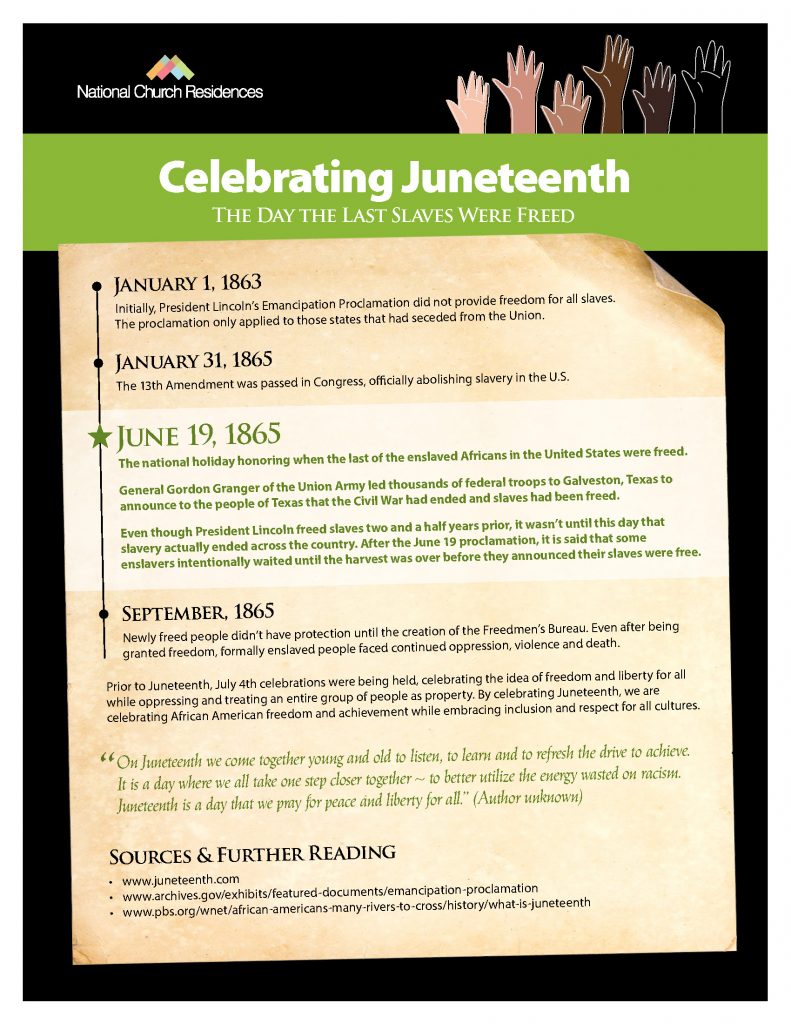

“On Juneteenth, we come together young and old to listen, to learn and to refresh the drive to achieve. It is a day where we all take one step closer together ~ to better utilize the energy wasted on racism. Juneteenth is a day that we pray for peace and liberty for all.” (Author unknown)
January 1, 1863
Initially, President Lincoln’s Emancipation Proclamation did not provide freedom for all slaves. The proclamation only applied to those states that had seceded from the Union.
January 31, 1865
The 13th Amendment was passed in Congress, officially abolishing slavery in the U.S.
June 19, 1865
The national holiday honoring when the last of the enslaved Africans in the United States were freed.
General Gordon Granger of the Union Army led thousands of federal troops to Galveston, Texas to announce to the people of Texas that the Civil War had ended and slaves had been freed.
Even though President Lincoln freed slaves two and a half years prior, it wasn’t until this day that slavery actually ended across the country. After the June 19 proclamation, it is said that some enslavers intentionally waited until the harvest was over before they announced their slaves were free.
September, 1865
Newly freed people didn’t have protection until the creation of the Freedmen’s Bureau. Even after being granted freedom, formally enslaved people faced continued oppression, violence, and death.
Prior to Juneteenth, July 4th celebrations were being held, celebrating the idea of freedom and liberty for all while oppressing and treating an entire group of people as property. By celebrating Juneteenth, we are celebrating African American freedom and achievement while embracing inclusion and respect for all cultures.
Sources & Further Reading
www.juneteenth.com